

The Kenosis of the Word
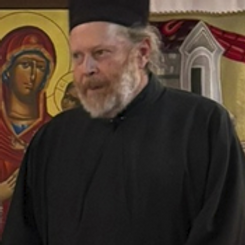
«We needed God to become incarnate and die so that we might come back to life.»
Saint Gregory of Nazianzus, Oration 45, 28
The Word Became Flesh
The Word became flesh. According to the will of the Father, the Holy Spirit made the incarnation of the Son possible; through His action, the Virgin was able to receive within herself the divinity of the Word. The Word Himself fashioned the beginnings of His humanity from the virginal flesh.
This mysterious and unfathomable process marks the beginning of the Incarnation of Jesus Christ and the origin of the humiliation He willingly assumed: “He emptied Himself, taking the form of a servant, being made in human likeness” (Philippians 2:7).
This movement of self-emptying is called “kenosis” (1).
By becoming flesh, Christ God assumes human nature and gives it an existence capable of being saved. His humanity derives its being from His eternal Person, from His divine hypostasis (2). He is God from all eternity, existing personally with the Father and the Holy Spirit.
Such are the Christological teachings of the Church Fathers.
Perfect God, Perfect Man
Christ's humanity is like that of Adam: an immortal and incorruptible nature before the Fall. Through the Fall, the perfect God embraces, though not entirely, the condition of fallen humanity. He assumes, through the human condition, that which is contrary to nature: a nature that has inherited suffering and death.
He takes upon Himself the consequences of sin, becoming “obedient unto death, even death on a cross” (Philippians 2:8), even descending into Hades.
The expression “Man and God” describes two perfect and distinct natures in a single hypostasis: a union without mixture. It is a union (3) “without confusion, without change, without division, and without separation.”
The two natures are neither blended together nor destroyed through the principle of the hypostatic union. This was something inconceivable to Hellenistic thought, which could not accept the coexistence of two “perfect” principles.
Four centuries of struggle were necessary for “Christian folly” to prevail over Greek wisdom and establish the truth of the teachings proclaimed by the Fathers at the Fourth Ecumenical Council, held at Chalcedon.
Two Stages of Self-Emptying
Before the Incarnation
The Son of God accepts becoming the Son of Man. God's incarnation does not in any way distort our humanity or its reality. From within, He transcends our suffering condition through the power that His divine nature bestows upon the body.
In his Epistle to the Philippians (2:5–11), Saint Paul explains that the Word, possessing the divine nature, takes on the condition of a servant.
This self-emptying is possible because of His hypostatic status (4) as the Son of God. According to Saint Cyril of Alexandria, who develops the Pauline understanding, the Word Himself became the hypostasis of the whole of human nature. He encompasses it in its entirety, without the passions that are the diseases of the soul.
His impassibility does not mean insensitivity. He assumes all the experiences and affections of the human condition: hunger, thirst, sleep, pain, fear of death… All the needs of the body are assumed.
This is unlike fallen humanity, which mixes natural needs with pleasure until the two become confused, constantly slipping from one to the other through habit and the pursuit of pleasure. This often leads to the disintegration of one's “moral” being.
Christ, the great Physician of souls, lovingly calls us to recover spiritual health and rediscover our fullness.
“Without Me you can do nothing” (John 15:5).
After the Incarnation
During His earthly sojourn, the Word lays aside His divine glory. Jesus says to His Father: “And now, O Father, glorify Me with Your own self, with the glory which I had with You before the world was” (John 17:5).
He lays aside His divine privileges; nevertheless, by taking on flesh, the Son of God never relinquishes His sovereignty, His omnipresence, or His divine consciousness. All these things underscore the truth of kenosis.
At the Transfiguration, which is also a revelation of the Trinity, Christ lifts the veil of the flesh and shows His disciples His human nature transfigured by the divine energies, preparing them for this vision, according to Saint Gregory Palamas.
The tradition of the Orthodox Church never disregards Christ's divinity when contemplating His humanity, for the fullness of divinity dwells bodily in Him: “For in Him dwells all the fullness of the Godhead bodily” (Colossians 2:9).
Divine condescension characterises His voluntary humanisation, associated with human weakness. He suffers and overcomes suffering through the divine power contained within His divine Person.
His body is deified from the very moment of His Incarnation. This is indeed the deification of all the operations and powers of Christ's human nature, by virtue of its hypostatic union with His divine nature.
In other words, human nature is “enhypostasised” by the divine Word and deified because of the divinity of His Person.
The divine Person, in a sense, bears both the divine nature and the human nature in a perfect conjunction, a perfect “interlocking”.
This conception, developed by Saint Maximus the Confessor, is shared by other Church Fathers as well (5).
Death on the Cross
Christ, the divine Person and Son of God, dies on the cross. He suffered according to His humanity while remaining immutable in His divinity. He manifests His divine power through His body.
The prayer in Gethsemane, belonging to His “perfect humanity”, expresses the terror of death. Was He not deeply grieved at the death of Lazarus? “Jesus wept” (John 11:35), giving us what is the shortest verse in the Gospels in French.
Christ, clothed in garments of mockery, remains the King of the world, the Creator of the cosmos, and the eschatological Judge accomplishing the work of salvation.
The One of the Holy Trinity, victorious over death upon the wood of the Cross, also came to liberate those held captive in Hades.
His sufferings manifest His kenosis, while His miracles reveal the unchanging nature of His being. They demonstrate the transcendence of our fallen condition, the destruction of sin, and, finally, the possibility of deification for all humanity.
“And through both, the miracles and the sufferings, He has granted us the destruction of sin and the grace of deification” (6).
The Assumption of Human Nature
Christ willingly accepts death. This death is unjust because it is not connected with sin; it signifies liberation from death itself. Death is condemned, and death itself is brought to an end through Christ's sacrifice.
Christ escapes the infernal cycle of pleasure and pain, feeling neither attraction towards the former nor aversion towards the latter. He rejected the demonic temptations in the wilderness, described in Matthew (4:1–11) and Luke (4:1–13).
On the Cross, He overcomes the temptations associated with suffering and death, bequeathing to humanity liberation from ancestral sin and the transcendence of death.
He unites humanity with God, human beings with one another, and humanity with the cosmos, accomplishing the work of the great Mediator.
At the Ascension, Christ does not separate Himself from His human body. Rather, He brings human nature into the very heart of divine life. The flesh is glorified, and humanity can enter into Trinitarian life and participate in God's uncreated energies.
Christ, seated at the right hand of the Father, makes deification possible.
In truth, the incarnate Word lived in two states simultaneously: He never ceased to be with the Father in “heaven”, while also dwelling alongside human beings, living among them and participating in their history.
He accomplished His work both in God, within unchanging eternity, and among human beings, within the unfolding of time.
This ascending and descending movement of the Divinity is also the foundation of all prayer and of the entire mystery surrounding the liturgy.
The ascending movement of Christ's Ascension is followed by the descent of the Holy Spirit, who initiates the faithful into the mystical life, enabling them to participate in the divine nature.
“O You who, through Your Ascension, filled with ineffable joy the disciples and the Theotokos (7) who gave birth to You, make us also worthy of the joy of Your chosen ones, through their prayers and because of Your great mercy!”
Explanatory Notes
1. Kenosis — From the Greek kenōsis, derived from the verb kenoō, meaning “to empty”. In theology, it denotes abasement, condescension, humility, self-emptying, and self-annihilation.
2. Hypostasis — From the Greek hypostasis, meaning “that which stands beneath” or “person”. In God there is one essence but three Persons, three hypostases: the Father, the Son, and the Holy Spirit. Hypostasis also describes the unique way in which a person possesses and expresses the essence.
3. According to the historical definition established by the Council of Chalcedon in 451.
4. Christ's humanity is deified according to the “hypostatic union” and the “communication of idioms”. Christ's humanity is “enhypostasised” in the Logos, acquiring reality and subsistence within a Person.
The “communication of idioms”, or perichoresis, refers to the union of the human and divine natures in the Person of Christ, without any alteration of their structure or essence. The human nature is deified through intimate contact with the divine nature.
5. Before Saint Maximus the Confessor, this understanding was also found among Fathers such as Irenaeus, Origen, Athanasius of Alexandria, Gregory of Nyssa, Gregory of Nazianzus, Cyril of Alexandria, Pseudo-Dionysius, and Leontius of Jerusalem.
6. “Letter 16 of Saint Maximus the Confessor”, quoted by Dumitru Stăniloae, p. 69, in Orthodox Dogmatic Theology, vol. 2, published by Cerf & Apostolia.
7. Theotokos — From the Ancient Greek Theos (“God”) and tiktō (“to give birth”): “she who gave birth to God”, or “Mother of God”.
Comments